


To choose a hair topper for women with thinning hair, start with the area you want to cover and whether the surrounding hair can support its attachment. Then compare the base dimensions, part or fringe, color, hair length, and fullness. A close color match cannot make up for a base that leaves the target area exposed or clips that pull.
A topper adds coverage to part of the head and blends with your own hair around it. It is different from a full wig. You do not need to decide from one styled photograph: a front view, an underside view, and a few measurements give you a much better starting point.
How to choose a hair topper for women: start with coverage
Look at your hair in the part and style you usually wear. Is the area you want to cover mainly along the part, at the crown, toward the front, or spread across the top? These are shopping observations, not a diagnosis of why your hair is thinning.
Take a top view and a back view in consistent light, or ask someone to help. Note the area you want covered and the surrounding hair that would remain visible. A narrow strip along the part and a wider crown area may need different base shapes even when you want the same hair length.
Browse the Authris human hair topper collection with that outline in mind. If you need broader coverage or are unsure about clip attachment, compare the formats in wigs and toppers for thinning hair and speak with a hairpiece fitter. A full wig has its own fit and securing requirements; it is not automatically the answer for every wearer.
Check hair topper base size and clip placement together
The base is the foundation underneath the hair. Its front-to-back and side-to-side dimensions describe coverage; the hair's length describes how far the strands extend. These measurements are not interchangeable.
Use a flexible measuring tape to record the area you want covered in both directions. Then check the exact base outline and attachment points on the product you are considering. The clips need suitable surrounding hair to grip. Do not choose the smallest base merely because the top photograph looks less bulky, or the largest one simply because it covers more.
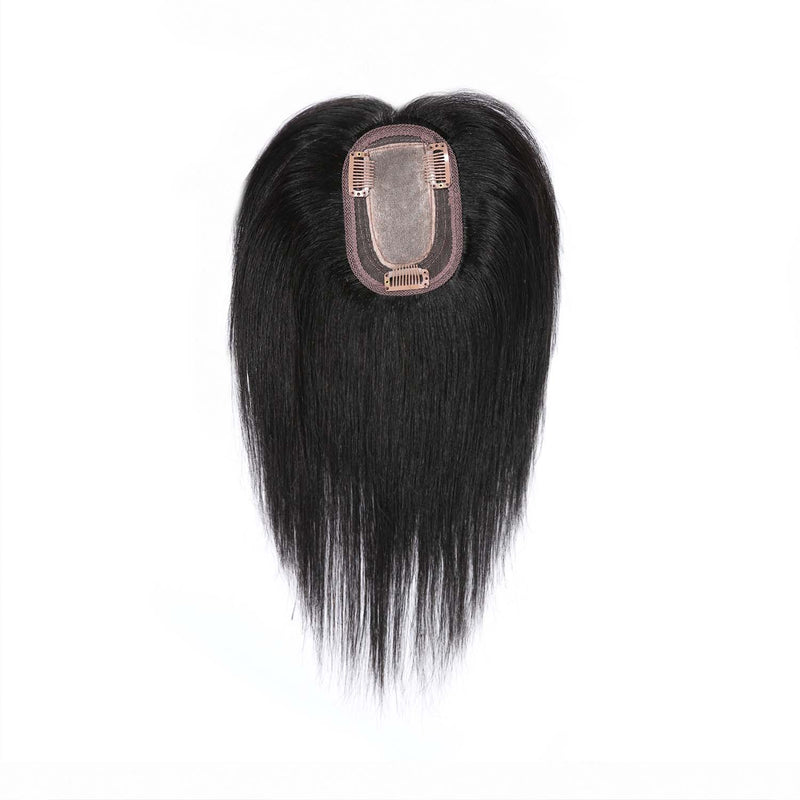
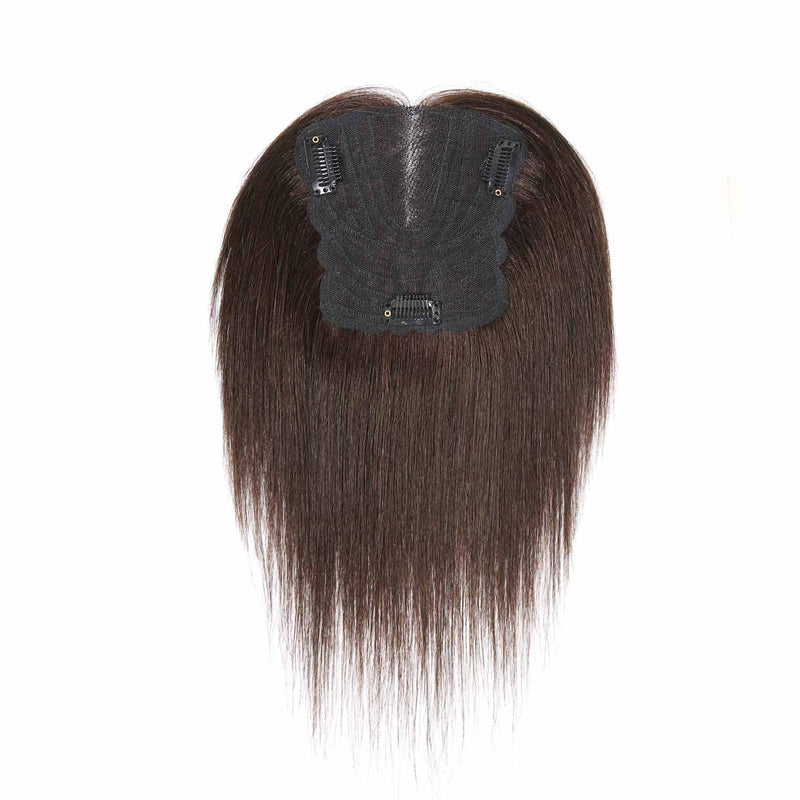
A single option labeled “10 Inches” is not a base width-and-depth specification. If the listing does not give the measurements you need, ask for the base dimensions and an underside photo before ordering. There is no universal extra margin that guarantees a secure fit for every head and attachment layout.
During a permitted fitting, stop if the piece tugs, hurts, or puts pressure on fragile hair. The American Academy of Dermatology's guidance on hair tension explains why repeated pulling should be taken seriously. A topper provides cosmetic coverage; it does not treat the cause of thinning. A dermatologist can assess hair loss or scalp symptoms.
Choose the front, part, and base construction you want to wear
Picture the finished style before comparing construction names. Do you normally wear bangs, a middle part, or a side part? Will your own front hairline remain visible? Ask how the topper's front edge is intended to blend into that style.
Terms such as T-Part, Butterfly Mesh, heart-shaped, and realistic scalp describe different listing features. They do not, by themselves, establish the base dimensions, fiber used in the base, or how far the part can move. A “realistic scalp” label is not confirmation of silk or monofilament construction.
Check a close-up of the top and an underside photo together. If you want a side part, confirm the available parting direction rather than assuming the hair can be moved freely. If you want bangs, inspect the actual fringe shape and length. Cutting a fringe or changing the base is a permanent step; make those decisions after confirming fit and the return conditions.
Match color, length, and fullness to the hair that stays visible
Compare the join between the topper and your own hair
For a hair topper color match, look at the hair that will sit next to the topper around your face and through the sides. Compare in indirect daylight as well as ordinary indoor light. Screen settings and lighting can change a shade's appearance, so names such as Natural Black, Chocolate Brown, and Dark Brown are starting points rather than proof of a match to your own hair.
The Authris color guide gives general shade context. Use the selected topper's own photos for the final comparison. If your hair has several tones or visible gray, send a clear description and photos through Authris's contact page to ask about the available choices. Do not assume a single dark shade will blend with every mixed or highlighted color.
Check the transition through the sides and ends
A topper can match at the crown and still look separate where its ends meet your haircut. Compare your side lengths, layers, and usual texture with the product's hair. Think about the style you can maintain regularly, not only a photograph taken immediately after styling.
More fullness is not always the result you want. If your own hair is fine, a sharp change from a thick top layer to sparse sides may make blending harder. Inspect the outline from the front and back before deciding to thin or cut the piece. A hairpiece stylist can assess blending options once the fit is right.
Build a shortlist from six current Authris product examples
These listings give you different fronts, base descriptions, and shades to compare. They are examples to inspect, not a prescription for a particular level or cause of thinning:
- Topper with bangs in Natural Black — compare the fringe with the front style you want to wear.
- Topper with bangs in Chocolate Brown — check the color transition as well as the fringe.
- Heart-Shaped Middle-Part topper in Natural Black — inspect the part and confirm the base outline for your coverage area.
- Realistic Scalp topper in Light Blonde — compare the shade and visible part; ask about construction details when needed.
- Butterfly Mesh topper in Dark Brown — use the underside view to discuss clip positions and dimensions.
- T-Part topper in Chocolate Brown — confirm whether its part suits your usual hairstyle.
Check the current selected option and availability on each page. The linked listings describe straight human hair with clip-in wear, but that does not make every construction equally suitable for your hair or scalp.
Before ordering or altering a topper, close the information gaps
Your shortlist is ready when you can answer three questions: will the base cover the intended area, where will it attach, and how will its hair meet yours? If one answer is missing, pause the purchase decision and ask about that detail.
Keep a small note with your coverage measurements, preferred part or bangs, shade, and desired hair length. Include any area where you would avoid attaching a clip. That information makes a fitting conversation more useful than asking only for the “best topper.”
Read the current return requirements before a fitting, wash, haircut, coloring, or other alteration. Inspect the item when it arrives and contact the seller about concerns before changing it. Human hair still needs its own care routine; keep the Authris care guide as general context and follow the directions supplied with the particular topper.
Choose the piece whose coverage, attachment, and blending details you can verify. Getting those decisions right is more useful than choosing by a construction name, a longer length, or a promise of instant invisibility.


