


-

Straight
Explore StraightShape: Smooth, mostly straight strands.
Look: Sleek lines and a flatter silhouette.
Care: Gently detangle and smooth the ends. -

Body Wave
Explore Body WaveShape: Broad, loose S-shaped waves.
Look: Soft movement and relaxed curves.
Care: Reshape the waves gently while drying. -

Deep Wave
Explore Deep WaveShape: Closer, defined waves.
Look: A more pronounced wavy silhouette.
Care: Detangle in sections; refresh the pattern gently. -

Curly
Explore CurlyShape: Distinct loops and ringlets.
Look: Spring and visible fullness.
Care: Work in small sections; avoid rough dry brushing. -

Kinky Straight
Explore Kinky StraightShape: Straight with a textured finish.
Look: Blowout-like body.
Care: Detangle gently and limit repeated heat.


Texture and Cap Type Are Different Choices
Lace Front Wig
Closure Wig
Glueless Wig
Bob Wig
Headband Wig
Full Lace Wig
Lace front describes the front of the cap, not the hair pattern. Choose your texture separately, then check the available parting area.
A closure is a smaller lace area for parting. Straight, wavy or curly hair can sit on the same cap construction.
Glueless describes how the wig is secured. It does not tell you whether the hair is straight, wavy or curly; check both texture and fit.
Bob describes the cut and length, not one texture. A straight bob and a curly bob can create very different silhouettes.
A headband covers the front edge of the cap. The hair can still have different textures, so compare the pattern as well as the attachment.
Full lace describes the cap coverage, not curl shape. This is a construction reference; check current product details for available cap types.


-
Your Preferred Finish
Choose smooth lines, soft waves, defined curls or a textured blowout look. Start with the shape you want to wear most often.
-
Your Refresh Routine
Defined waves and curls need time to refresh their shape. Pick a pattern you are happy to care for between washes.
-
Detangling Time
Longer or more textured hair can take more section-by-section detangling. Match the care routine to the time you have.
-
Visible Length
Waves and curls bend along the strand, so the finished look may sit higher than a straight style at the same listed length.
-
The Fullness You Want
Curves and textured strands can add width without adding more hair. Check the silhouette and the stated density separately.
-
Dry Product Photos
Wet hair may look longer and less full. Compare dry photos and movement, preferably in the color you plan to buy.
The Same Length Can Look Different
A texture bends the strand and changes the space it takes up. Separate measured length, visible length and density when comparing two wigs.
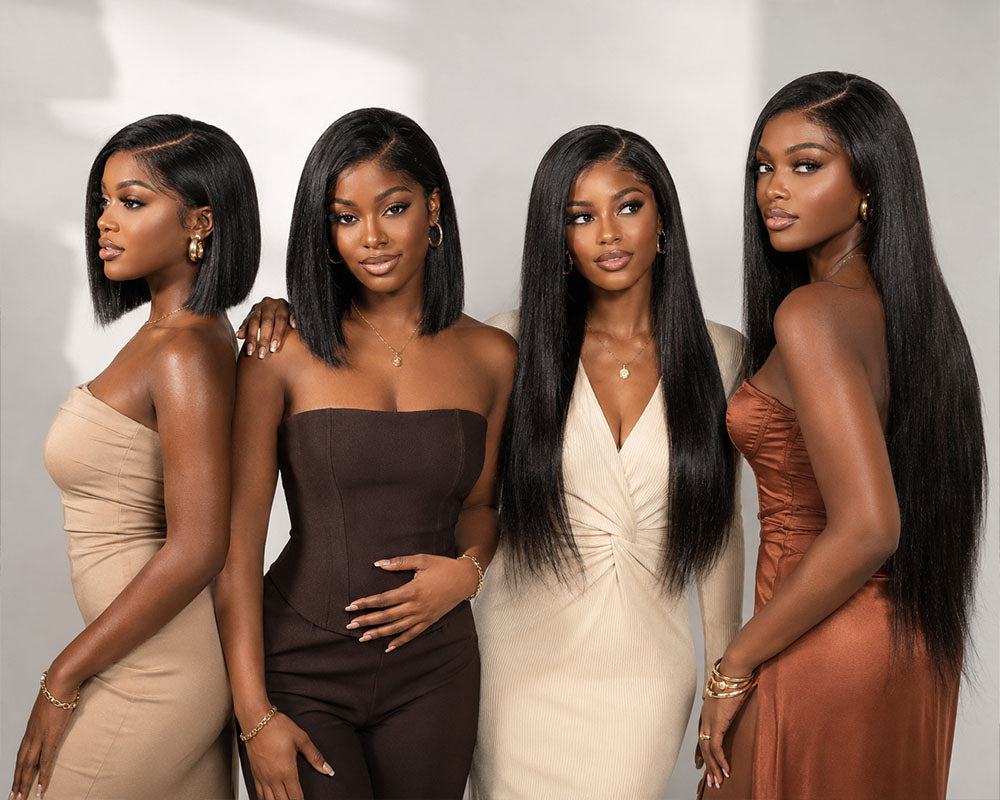
Read Length Through the Texture
- Straight: Falls closer to its measured length.
- Waves: Bends shorten the visible drop.
- Curls: A tighter pattern can sit noticeably higher.
- Before choosing: Check how that product is measured and view it dry. This chart is a visual reference, not a list of available lengths.
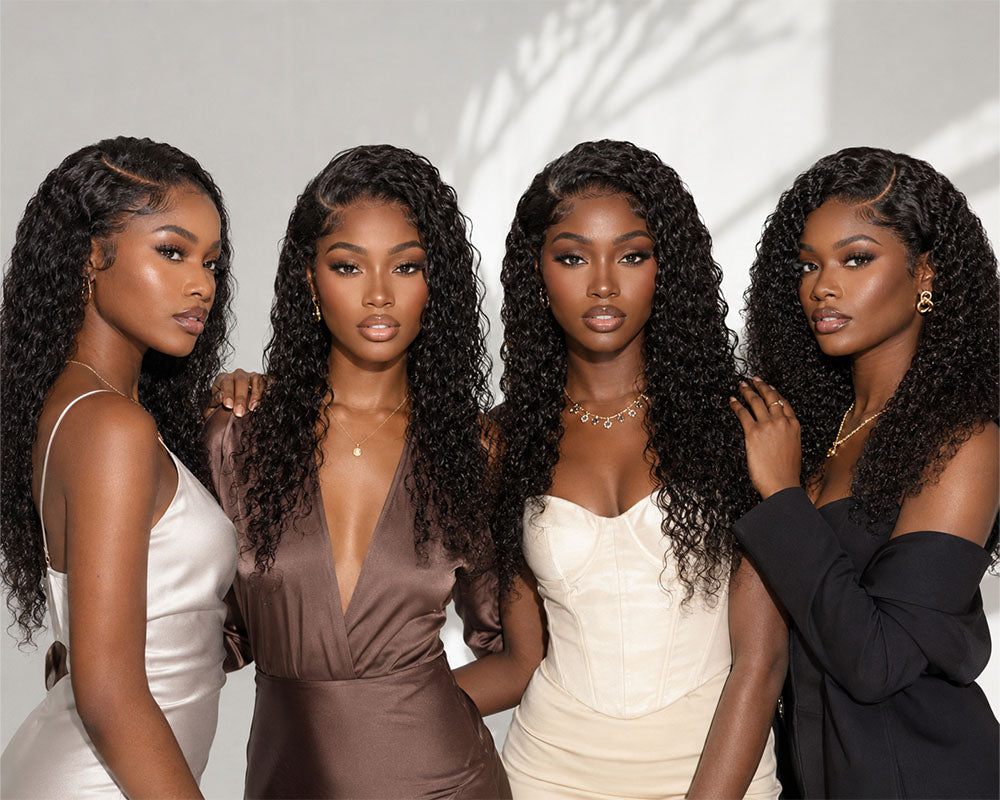
Texture Changes the Look of Fullness
Density describes how much hair is in the wig. Texture describes its shape. A curly or kinky straight style can look wider than a sleek straight style at a similar density.
Use the chart to compare silhouettes, then check each product's stated density. The percentages shown are reference examples.
-
Step 1: See It Dry Compare the pattern from roots to ends in dry product photos. Wet or freshly styled hair can give a different impression.
-
Step 2: Check the Drop Look at where the ends sit on the model. Read the length measurement method before expecting two textures to fall alike.
-
Step 3: Match Your Routine Read the care instructions and decide how much detangling, curl refreshing or heat styling you want in your week.
Choose Shape, Then Check the Finish
Texture sets the overall shape. The hairline, parting and cap fit determine how the wig sits at the front. Evaluate both before you choose.
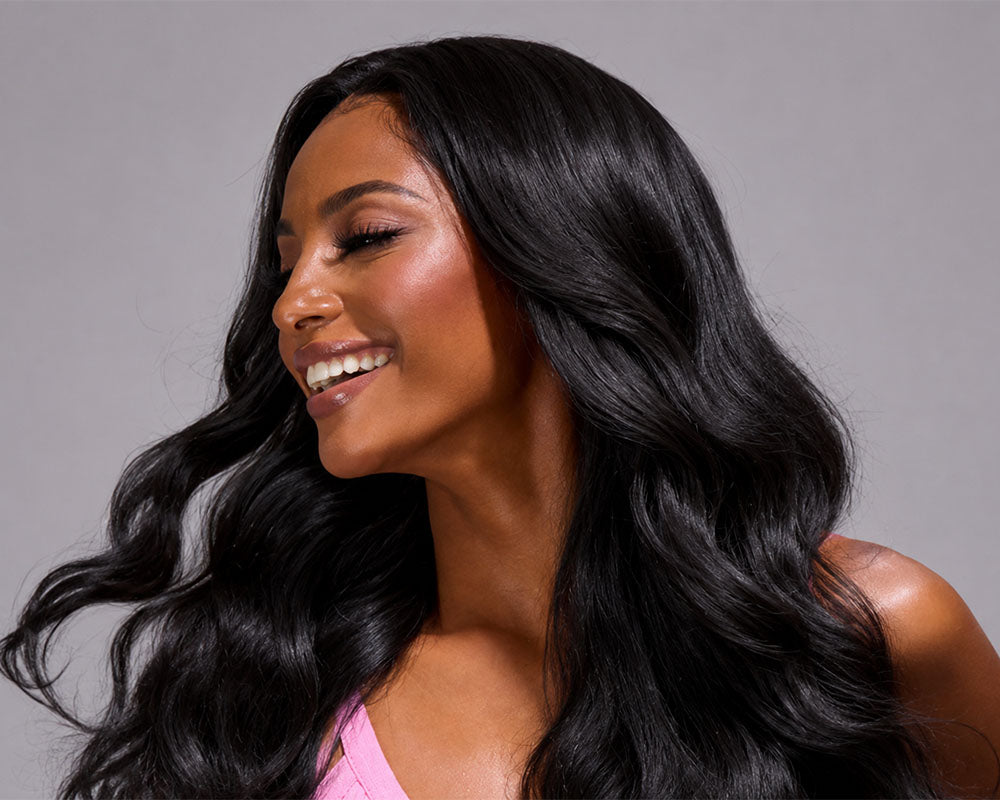
Check Texture, Then the Front Details
- Pattern: Look for the waves or curls you prefer through the mid-lengths and ends.
- Root volume: Decide whether you want a flatter top or more lift.
- Parting: Check the part shown on the actual cap.
- Hairline: Review close-ups of the front finish separately from the texture.
- Fit: Confirm cap measurements; texture cannot compensate for the wrong fit.
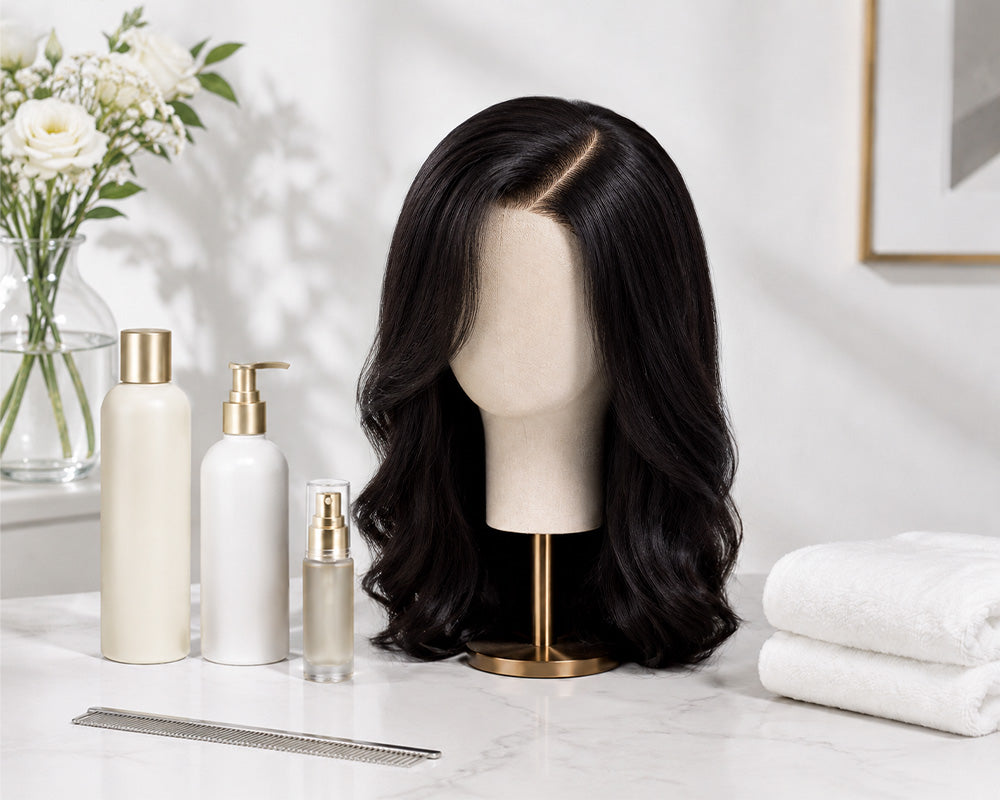
Care for the Pattern You Choose
- Straight and kinky straight: Detangle gently from ends upward. Limit repeated heat if you want to keep the original finish.
- Body wave: Handle gently and reshape the broad waves as the hair dries.
- Deep wave and curly: Work in small sections and avoid rough dry brushing that separates the pattern.
- Every texture: Follow the product's washing and styling instructions, and dry fully before storing.
Wig Texture FAQs
What is the difference between body wave and deep wave?
Body wave usually has broad, loose S-shaped waves. Deep wave has a closer, more defined wave pattern and often looks fuller. Names can vary between sellers, so compare the dry photos of the actual wig.
How is curly different from deep wave?
Deep wave is usually sold with an elongated, repeating wave. Curly styles show more distinct loops or ringlets. There can be overlap, so judge the shape shown in the product photos rather than the name alone.
Is kinky straight the same as straight hair?
Both fall mainly straight, but kinky straight has a textured, blowout-like finish with more visible body. Straight hair has a smoother, sleeker surface. Kinky straight is not a tightly curled pattern.
Will a curly wig look shorter at the same listed length?
It can. Bends and curls reduce the visible drop even when the measured strand length is similar. Check whether the seller measures the hair stretched or unstretched, and compare dry photos before choosing.
Does a fuller-looking texture mean higher density?
No. Density describes the amount of hair, while texture describes its shape. Curls and textured strands can take up more space. Compare the stated density as well as the finished silhouette.
Which texture needs less daily styling?
The easier choice is the pattern you plan to wear as it comes. Straight styles may need smoothing; waves and curls may need refreshing and careful detangling. Length, wear habits and the specific wig's care instructions also affect the routine.
Can I straighten or curl an AUTHRIS human hair wig?
Check that product's heat-styling instructions first. Use suitable heat protection and the recommended temperature. Repeated heat can change the original pattern; do not assume it will return exactly after washing.
Does choosing a texture also choose the cap type?
No. Texture is the hair pattern; lace front, closure and headband describe the construction or attachment. Choose the look you want, then check the cap type, measurements, parting area and fit on the product page.